The Rise of AI and Machine Learning in IT: What It Means for the Future
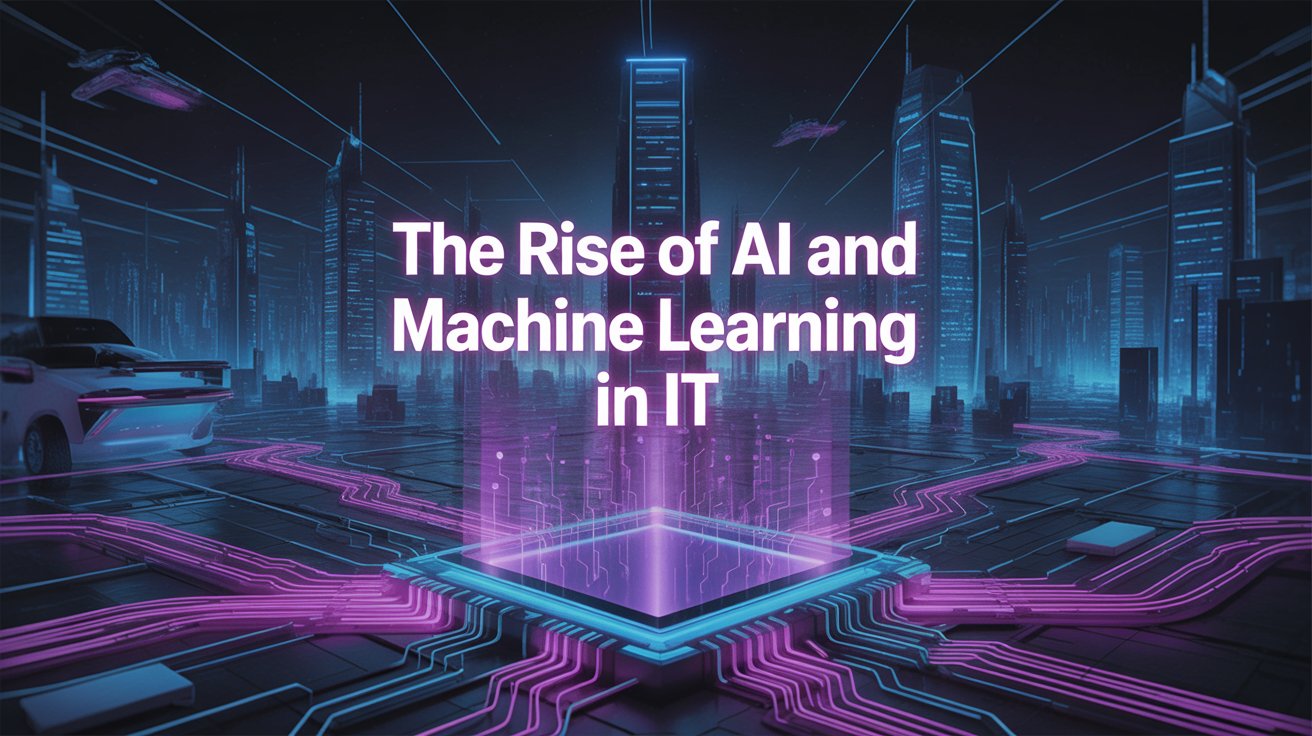
AI and Machine Learning are accelerating a new era in IT — one defined by predictive, adaptive, and autonomous systems that can learn, optimize, and self-correct. As AIOps becomes the norm, IT ops teams will work more collaboratively with AI-driven insights, while developers leverage generative tools to accelerate delivery.
In recent years, Artificial Intelligence (AI) and Machine Learning (ML) have emerged as transformative forces within the IT industry. No longer relegated to the realm of research labs, these technologies now power enterprise infrastructure, cybersecurity systems, software development workflows, and customer experiences. As we look ahead, the pace of adoption and innovation in AI/ML will reshape the very fabric of IT — and by extension, the future of work, business, and society.
? A Brief Foundation: How AI and ML Evolved
AI refers to computer systems designed to mimic human cognitive abilities: reasoning, perception, learning, and decision‑making. Machine Learning, a subset of AI, enables machines to learn from data rather than follow explicit rules — allowing them to adapt, predict, and optimize over time Science News Today.
AI’s history stretches back to the 1950s, but it wasn’t until the advent of big data, powerful GPUs/TPUs, and advanced algorithms that ML underwent explosive growth. Today, deep learning models — such as LLMs — power tasks previously thought infeasible, from autonomous driving to creative content generation Science News Todaydesignindc.comGeeksforGeeks.
? Why AI/ML Matter in IT Today
AI and ML are no longer optional innovations — they are essential capabilities in modern IT systems. Key drivers include:
- Intelligent automation of routine tasks, freeing up staff for strategic work and reducing human error. From infrastructure monitoring to IT support bots, AI is enabling proactive, self‑healing systems MIT Distance Learningmindler.com.
- Enhanced cybersecurity, where machine learning identifies unusual patterns in massive volumes of network data, enabling faster threat detection and automated response LinkedIn+2MIT Distance Learning+2GeeksforGeeks+2.
- Predictive analytics, where IT operations can forecast outages, system failures, and performance bottlenecks before they occur — supporting smarter resource allocation and minimized downtime MIT Distance LearningWikipedia.
- Software engineering augmentation, through AI‑assisted code generation, intelligent code completion, debugging support, and documentation tools — all accelerating developer productivity Wikipedia+1designindc.com+1.
Together, these capabilities — often described under the umbrella of AIOps (AI for IT Operations) — are fundamentally changing how IT departments operate, making them more strategic, responsive, and reliable GeeksforGeeks+15Wikipedia+15MIT Distance Learning+15.
? Real-World Applications & Case Studies
Large enterprises and IT leaders are already reaping the benefits:
- IBM Watson AIOps automates anomaly detection and IT incident resolution, reducing downtime and manual intervention The Times+4The Times+4The Times of India+4MIT Distance Learning.
- Google Cloud AutoML offers no-code ML tools to build custom models — enabling IT teams to create predictive analytics without deep ML expertise GeeksforGeeks+2MIT Distance Learning+2designindc.com+2.
- Companies like Netflix leverage AI/ML to analyze user behavior, optimize streaming performance, and deliver personalized content recommendations MIT Distance Learning.
These platforms lay the foundation for self‑healing IT infrastructure, smart support desks, and data-driven decision-making that were previously unthinkable.
? Looking Ahead: Emerging Trends Shaping the Future
1. Generative AI & LLMs
Tools like ChatGPT, Bard, and DALL·E showcase generative AI’s ability to write code, design content, and compose responses — streamlining IT processes, documentation, and human-machine interfaces GeeksforGeeksdesignindc.com.
2. Edge AI & Real-Time ML
Processing AI directly on devices (edge computing) will enable ultra-low latency and greater privacy — ideal for IoT systems, real-time analytics, and smart infrastructure designindc.com.
3. Federated Learning for Privacy-Sensitive Domains
By training models across distributed data without centralizing it, federated learning is set to transform industries like healthcare and finance, protecting privacy while enabling AI insights Science News Today+2GeeksforGeeks+2designindc.com+2.
4. AutoML & Democratization of AI
Platforms that automate model selection, tuning, and deployment (AutoML) are making AI accessible to IT operators without deep ML training — expanding adoption across industries GeeksforGeeksdesignindc.com.
5. Ethics, Explainability & Responsible AI
Demand for transparent AI is increasing, especially in sectors like healthcare, finance, and governance. Explainable AI (XAI) seeks to make AI decisions interpretable and trustworthy GeeksforGeeksWikipedia.
6. Integration with Governance & Public Policy
Governments and enterprises are adopting AI to optimize public services, policy-making, resource allocation, and civic engagement — but are also grappling with bias, accountability, and privacy implications Science News TodayThe Times of IndiaThe Times of India.
7. AI‑Powered Talent Evolution
While AI automates repetitive coding and entry-level roles, research shows it also increases demand for complementary human skills — such as creativity, ethics, and strategic thinking arXiv.
Together, these trends point to a future where AI empowers smarter, fairer, more responsive IT systems, with human oversight remaining central.
? The Workforce & Skills Transformation
In India — home to a large IT workforce — automation and AI are dramatically reshaping employment. Studies forecast that up to 69% of certain IT/BPO jobs may be automated by 2030, yet growth in mid- to high-skilled tech roles continues Wikipedia.
Visionary leaders like Infosys co-founder N.R. Narayana Murthy argue that, as in past tech revolutions, AI will create new roles rather than eliminate jobs: from data scientists to AI ethics officers, prompt engineers, and unstructured-data specialists Wikipedia+1The Times of India+1. Meanwhile, industry voices such as Waze’s Uri Levine suggest AI will raise software developer demand — boosting productivity rather than replacing talent Business Insider.
However, not all jobs are immune. Entry-level administrative, customer service, and repetitive coding roles face the greatest displacement risk, even as new roles emerge The Economic Times.
To thrive in this landscape, IT professionals will need to:
- Embrace AI literacy and tools (e.g., Copilot, AutoML).
- Develop complementary skills like ethics, collaboration, and strategic thinking.
- Keep pace through continuous upskilling and cross-disciplinary learning.
⚖️ Challenges & Considerations
Despite the promise, AI adoption also introduces risks:
- Bias and fairness: AI systems may propagate biases unless trained on diverse, high-quality data and designed with ethical principles in mind WikipediaScience News Today.
- Lack of Explainability: Black-box models make decision‑making opaque, reducing user trust — especially problematic in high‑stakes domains like healthcare and finance Wikipedia.
- Energy costs and environmental footprint: Training large ML models consumes significant energy, raising sustainability concerns designindc.com.
- Governance and regulation: As AI becomes embedded in public systems, policy frameworks must keep pace to ensure accountability, transparency, and citizen rights Wikipedia+15Science News Today+15designindc.com+15.
? In Conclusion: What AI/ML Mean for IT’s Future
AI and Machine Learning are accelerating a new era in IT — one defined by predictive, adaptive, and autonomous systems that can learn, optimize, and self-correct. As AIOps becomes the norm, IT ops teams will work more collaboratively with AI-driven insights, while developers leverage generative tools to accelerate delivery.
From the strategic lens:
- Organizations must invest in data, model governance, and AI ethics.
- Professionals should build both technical AI skills and human-centric competencies.
- Policymakers and institutions need to craft frameworks to ensure inclusive and responsible deployment.
Recommended For You

02 Sep 2023
Boosting Business Excellence: Essential Tools for Entrepreneurs to Speed Up Success

07 Sep 2023
Unlocking Success: Digital Transformation Strategies for Modern Businesses
11 Sep 2023
5 Tech Trends Shaping the Future of Business
14 Sep 2023
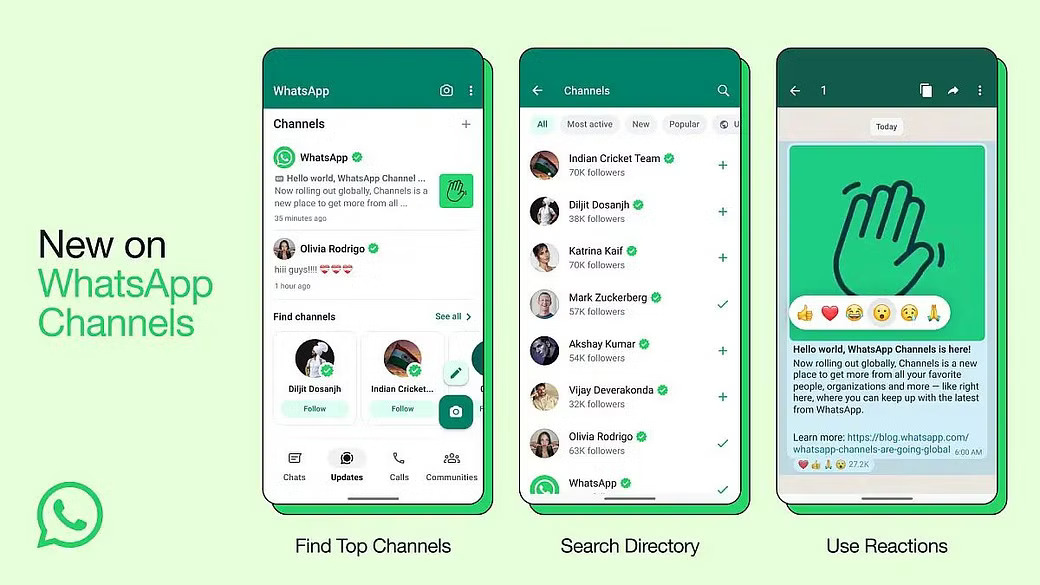
WhatsApp's New Channels Feature: A Game-Changer in Messaging

16 Sep 2023
The Future of AI in SaaS Development: A Revolution in Software

18 Sep 2023
How to Build a Strong Personal Brand for Business Success
25 Sep 2023
AI: Expectations vs. Reality
24 Oct 2023
How CRM Can Benefit Small Businesses: Case Studies and Success Stories

26 Oct 2023
Why You Might Be Failing at Information Technology
06 Nov 2023
Information Technology: 6 Steps to Make Sure More Engagement